
Advancing circular battery production through reused, recycled and surplus materials
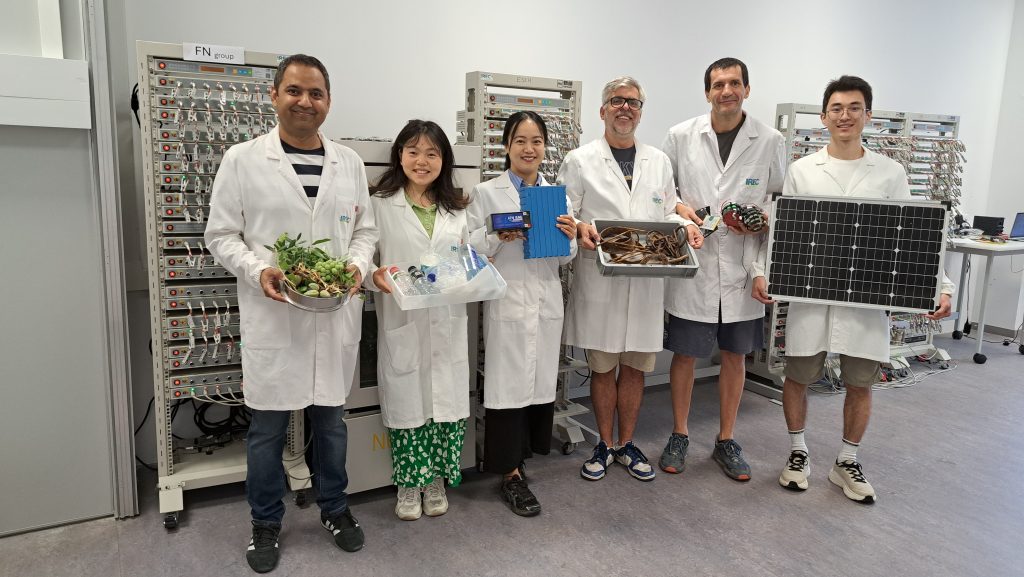
A new review article, entitled “Batteries from reused, recycled, and surplus materials”, has been published in Advanced Sustainable Systems. The study explores how reused batteries, reconditioned components, recycled materials and surplus resources from other industries could contribute to more circular and sustainable energy storage technologies.
The growing deployment of electric vehicles and renewable energy systems is rapidly increasing demand for batteries and the raw materials required to produce them. Although recycling End-of-Life (EoL) batteries will be essential, the volume currently available for recycling remains insufficient to meet the expected growth in material demand.
The review examines different strategies to address this challenge, including the reuse and repurposing of batteries, the refurbishment of components and the recovery of materials from EoL cells. It also looks beyond conventional battery recycling by analysing the potential use of biomass-derived resources and residues from industries such as metallurgy, electronics and oil refining.
The article discusses the technical requirements that recovered materials must meet to be incorporated into new batteries, including purity, safety and electrochemical performance. It also examines key factors for their future implementation, such as economic viability, environmental impact, regulation, sustainable-by-design approaches, life-cycle assessment and traceability tools such as the battery passport.
By bringing together advances at the material, component, cell and battery-pack levels, the review provides a comprehensive overview of the opportunities and remaining challenges involved in developing more circular, scalable and resilient battery value chains.
The review was led by Dr Jing Yu (IREC) and brings together contributions from an international team of researchers. IREC contributed through researchers from the Functional Nanomaterials department, the Battery Materials group, ICREA Professor Andreu Cabot and Dr Jordi Jacas. The consortium also included researchers from the Catalan Institute of Nanoscience and Nanotechnology (ICN2), Université de Montréal, the Institut de Chimie Séparative de Marcoule (ICSM), Université Grenoble Alpes, the Department of Environment, Land and Infrastructure Engineering (DIATI) at Politecnico di Torino, VTT Technical Research Centre of Finland, the University of Turin, and CY Cergy Paris University. The full article is available in Advanced Sustainable Systems and can be accessed at: https://doi.org/10.1002/adsu.70554