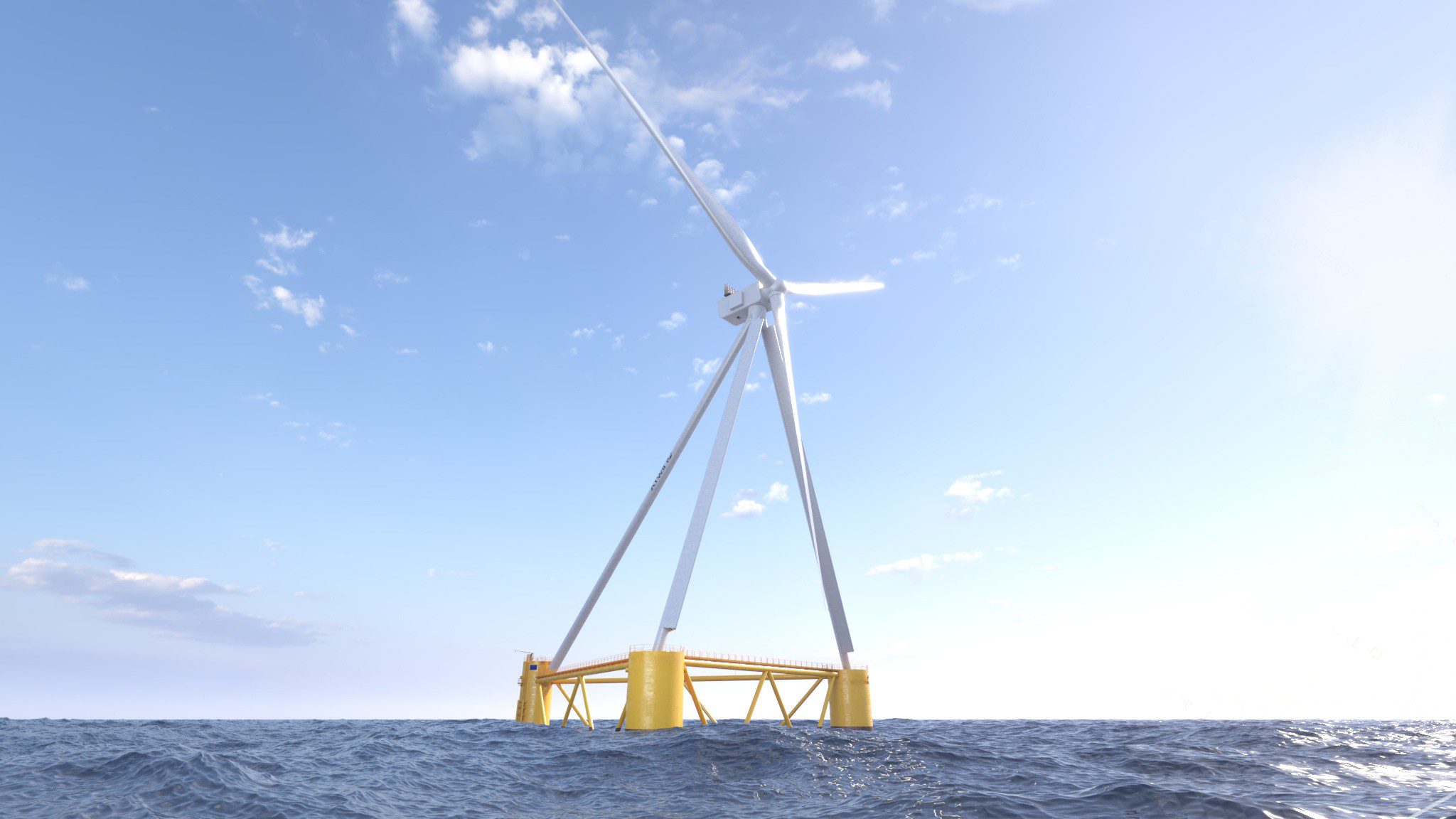
What is ABOUT PlemCat all about?
- Testing floating offshore wind and marine energy technologies in real Mediterranean sea conditions.
- Connecting up to three prototypes to the grid through a dedicated offshore infrastructure.
- Advancing technologies from TRL 4 to 8 to support industrial validation and market uptake.
- Enabling planned large-scale demonstration of next-generation floating turbines above 15 MW.
PlemCat is being developed as an international research and testing infrastructure for floating offshore wind and marine energies, situated in the LEBA1 zone in the Gulf of Roses, 16 to 24 km offshore the coast of northern Catalonia. The platform has obtained a favourable Environmental Impact Statement (22 July 2026P). The project is promoted by IREC, with the support of the Catalan Government and a broad consortium of public and private partners.
The platform is planned to accommodate up to three floating prototypes (up to 15 MW, up to 30 MW in total). Expanded to a capacity of 50 to support future R&D&I requirements) connected to the grid by a 66 kV submarine cable of approximately 25 km, landing at Sant Pere Pescador and running underground for 16 km to the Vilaür substation, where it connects to the Endesa 132 kV line, subject to the final authorised configuration and technical requirements. The site offers a mean wind speed of 9.5 m/s at 150 m height according to the project data currently available. Construction is planned to begin in 2027, with the official launch scheduled for 2028.
Globally, floating offshore wind reached 277 MW of installed capacity as of 2026, compared with 89 GW for bottom-fixed offshore wind. PlemCat is intended to provides the Mediterranean region with a dedicated facility to develop and validate the technologies required for this emerging sector, covering Technology Readiness Levels (TRL) 4 to 8.
Key technical specifications
The platform combines the core technical features required to test and validate floating offshore wind technologies at scale in the Mediterranean. It brings together grid-connected offshore capacity, a high-quality wind resource, full TRL coverage and infrastructure designed to support the deployment of next-generation floating prototypes under real operating conditions.
30
MW total
3
Prototypes
Floating
offshore
15
MW each
2028
Official launch
LOCATION
LOCATION LEBA1 zone, Gulf of Roses; 16–24 km offshore northern Catalonia.
GRID CONNECTIONS
66 kV submarine cable (~25 km); Sant Pere Pescador; Vilaür substation (132 kV, Endesa).
CAPACITY
3 prototypes × to 15 MW to 30 MW total.
WIND RESOURCES
9.5 m/s mean speed at 150 m height.
TRL RANGE
4 to 8.
TURBINES TESTED
Next-generation units above 15 MW.
Platform timeline
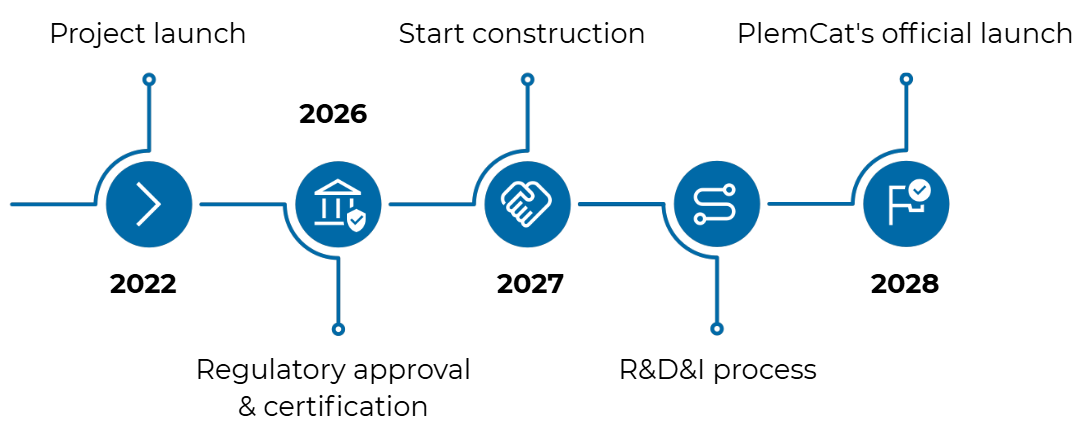
Timeline milestones are indicative and subject to applicable authorisations, environmental conditions, funding availability, technical readiness and other legal requirements.
Strategic Pillars
Four strategic pillars structure the platform’s activity across research, testing and demonstration for floating offshore wind in the Mediterranean. Together, they provide a high-level view of the platform’s main areas of work, bringing together environmental monitoring, engineering validation, innovation and social integration in support of coordinated and responsible development.
Environmental observatory & climate change
- Continuous marine and atmospheric monitoring
- Biodiversity and avifauna assessment
- Climate change impact on wind resource
- Environmental baseline for regulatory compliance
- Data for marine spatial planning
Engineering & supply chain
- Floating structure design and testing
- Mooring systems and anchoring
- Operations and Maintenance (O&M;) protocols
- Supply chain qualification
- Port and logistics coordination
- TRL 4 to 8 testing progression
Research & innovation
- Digital twin development
- Advanced sensor integration
- Machine learning for predictive maintenance
- Grid integration studies
- Hybrid marine energy systems
- Innovation transfer to industry
Social interaction & blue economy
- Coexistence with fishing and aquaculture
- Socio-economic impact assessment
- Blue economy synergie
- Stakeholder engagement
- Communication and outreach
- Regulatory and policy contributions






PlemCat is led by IREC (Institut de Recerca en Energia de Catalunya) under the mandate of the Generalitat de Catalunya and with co-funding from MITECO/IDAE (Ministerio para la Transición Ecológica y el Reto Demográfico) through the RENMARINAS DEMOS programme and the Next Generation EU instrument. The platform is being developed to operate under a broad collaborative framework involving universities, technology centres and private companies from Catalonia and beyond.