
Oxhyd is launched, the Catalan spin-off revolutionising hydrogen technologies with advanced solutions
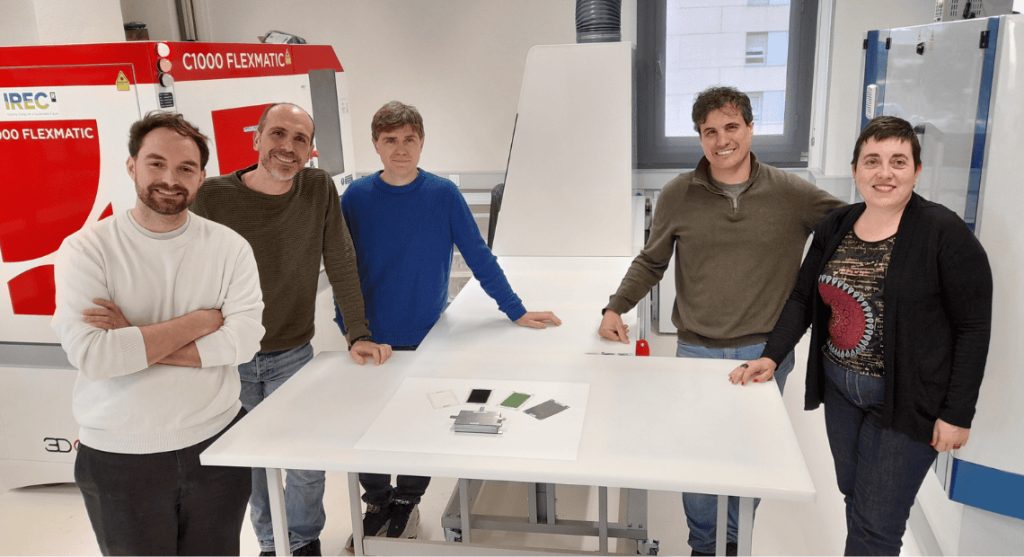
Today, Oxhyd Energy S.L. is officially launched as a new technology startup created in Barcelona as a spin-off of the Catalonia Institute for Energy Research (IREC) and the Catalan Institution of Research and Advanced Studies (ICREA). The company aims to transform the generation, use and storage of renewable hydrogen to accelerate the decarbonisation of the industrial sector with global impact.
Oxhyd commercialises a pioneering technology based on solid oxide ceramic devices manufactured with 3D printing, enabling the development of cost-competitive energy systems with high power density and a significant reduction in materials consumption. This innovation positions a technology developed in Barcelona as a pioneer in the field of hydrogen and clean energy worldwide.
Juande Sirvent, CTO of Oxhyd, explains that “hydrogen technologies have historically been constrained by limitations such as power density, efficiency or durability,” and adds that “with Oxhyd we address these challenges through a versatile technology that simplifies production processes and reduces costs.”
Oxhyd’s technology enables the manufacture of devices with a power density exceeding 2 kW per litre and 0.5 kW per kilogram, with an estimated industrial manufacturing cost below €1,000 per kW. These performance figures represent a key advancement compared to current market solutions. In addition, the same system can operate either in fuel cell mode —for electricity generation— or in electrolysis mode —for hydrogen production—.
The technology is designed for applications such as maritime transport, data centres and the decarbonisation of energy-intensive industries.
A spin-off born from excellent research
Oxhyd is the result of more than a decade of research at the Nanoionics and Fuel Cells Department of IREC. The founding team consists of ICREA Professor Albert Tarancón, researchers Juande Sirvent, Marc Torrell and Àlex Morata, together with ICREA, an institution that promotes scientific excellence in Catalonia by attracting international research talent. This technological development was possible thanks to EU funded projects like Cell3Ditor and HyP3D, among others.
Marta Fonrodona, Director of Corporate Development and Technology Transfer at IREC, highlights that “we are proud to see how innovations emerging from cutting-edge research at IREC take a step towards generating real impact on society,” and adds that for IREC, “Oxhyd is an example of how disruptive technology, in the hands of an exceptional scientific and entrepreneurial team, can play a key role in accelerating decarbonisation in the industrial sector.”
The startup is fully embedded in Barcelona’s deep tech ecosystem and has already received several key recognitions and sources of support. Last summer, Oxhyd was awarded the EmergEnt Prize by the Catalonia Efficient Energy Cluster, which recognises emerging talent and the most innovative projects in energy efficiency and the energy transition. The project has also grown thanks to its participation in The Collider technology transfer programme of Mobile World Capital Barcelona, the support of the H2CAT Network, and funding from AGAUR’s Knowledge Industry programme.
When necessity becomes opportunity
The decarbonisation of industry cannot only rely on electrification. The rise of artificial intelligence and large-scale data storage is exponentially increasing electricity demand, putting pressure on power grids and making the deployment of flexible and efficient energy solutions essential. At the same time, hard-to-electrify sectors such as heavy transport face an urgent need to reduce emissions.
In this context, Oxhyd’s technology offers a differentiated solution: it can operate not only with hydrogen, but also with other fuels such as ammonia, biogas or methanol, opening the door to multiple use cases and facilitating the transition towards a more sustainable and resilient energy system.
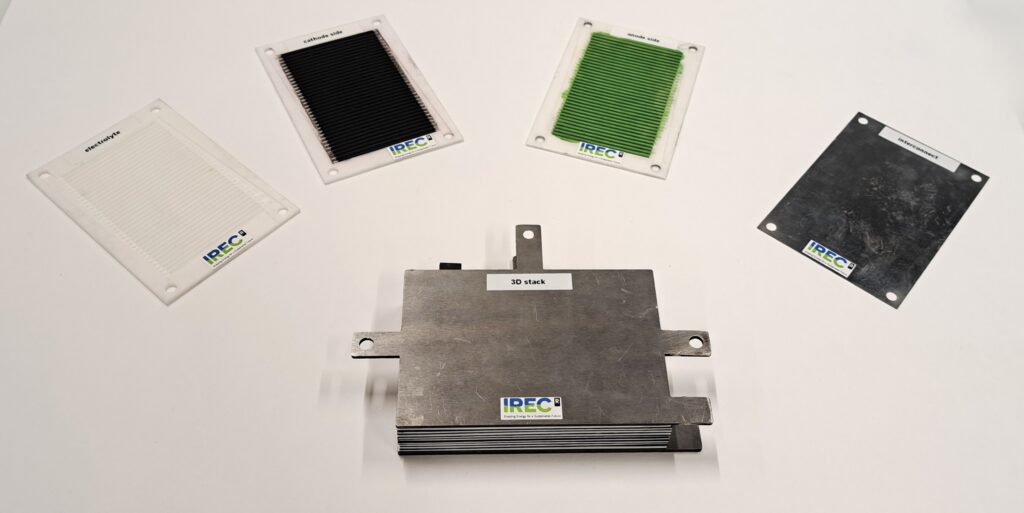
You can download today’s press release in English (EN), Spanish (ES) and Catalan (CAT) here: